rss
32

Subaru Head Gasket Repair

Today at the Shop We are replacing head gaskets on a Subaru Impreza that had recently been repaired at a local Subaru Dealership not that long ago, the customer in fact paid full price for the repair at the Dealership receiving no participation from Subaru due to the mileage, and the year of the Subaru.

The repair was short lived due to the nature of how the repair was made. One of the things I often comment on is the Subaru dealership flat rate pay system, how lousy it is for the customer and how it creates a situation where there is little to no value received when repairs are made by someone in to big of a hurry to care about the quality of the work being done.

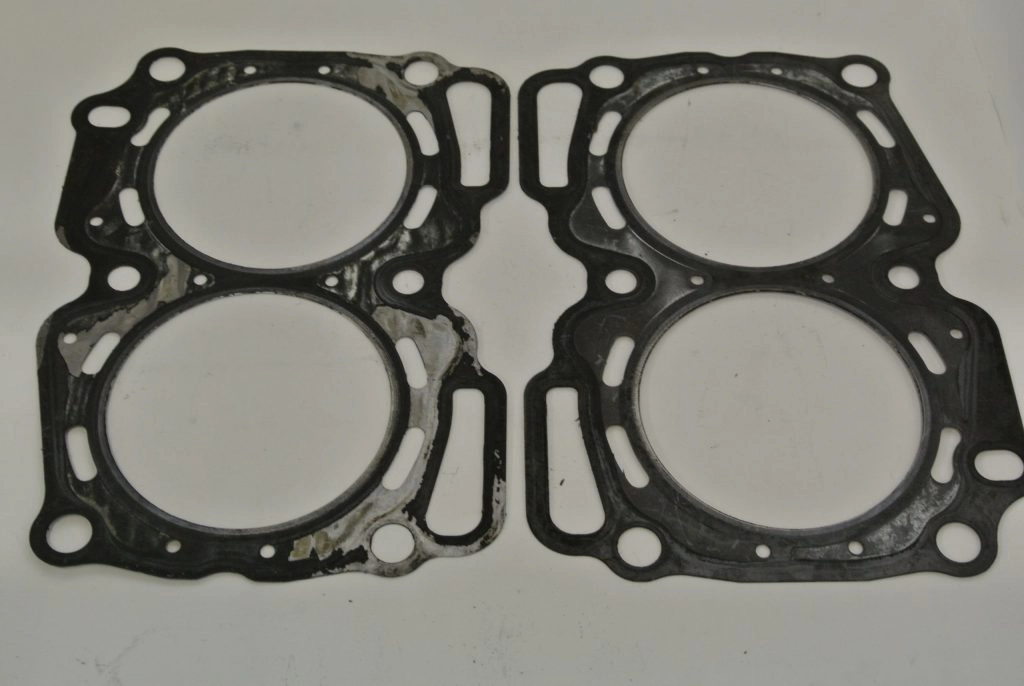
In the pictures below you will see how the Dealer Technician prepared the surface of the block and heads during the course of the head gasket repair, there are heavy scratches in the surface and the new head gaskets didn’t stand a chance of sealing for the long term.

Heavy scratches in the Surface of a Subaru Cylinder Head

Improper Gasket Prep of a Subaru 2.5l

Heavy scratches in the Surface of a Subaru Engine Block

Heavy scratches in the Surface of a Subaru Engine Block


Here is a video where I demonstrate just how easy it is to do it right!

We also observed that the engine had in fact not been removed for the repair.  What I have often tried to convey is that if you are the one paying for the repairs you are in control of the process and do not settle for less repair than you deserve.  When I hear that the dealer wants to charge extra to remove the engine I cringe.  When I see that despite the issue now being very well known that the Dealership service department still care so little about their customers that they allow the use of a whiz wheel to prep the gasket surface areas knowing thats its only about the production time of the repair and having nothing to do with Quality!

This situation applies to all makes and models in reality, but I will admit that I am surprised that Subaru has not done more to apply pressure to the Dealers to change the repair methods since the conclusion of the WWP-99 campaign.

So no matter where you live if you are faced with this situation instead of asking how much consider asking how will the repair be made.  I know that in some parts of the country the choices are in fact limited, but you still control the situation and deserve the best repair possible not one done in a hurry.

Thanks For reading

Justin

Helping you get more out of your Subaru!

About the Author

All Wheel Drive Auto is a unique independent Subaru service & repair facility. We combine years of dealer experience with a local neighborhood shop atmosphere. We use Subaru parts & test Equipment and have the expert knowledge to fix it right the first time.

Comments (32)

Trackback URL | Comments RSS Feed

  1. Joe says:

    Thanks for another great post Justin.
    I assume that you would go through the same, block sanding process on the engine block sealing surfaces as well. Is that correct?

    • Justin Stobb says:

      Hi Joe,

      Yes the same procedure for the engine block.

      Thanks for the feedback and the question.

      Justin

      • Jeff says:

        It’s tough working around the guide pins in the engine block. Do you have any suggestions?

        • Justin Stobb says:

          Did you buy a HG kit from us and read the guide?

          • Jeff says:

            No I didn’t I’m afraid. I already changed my gaskets but fear I may have to do the ones on my wife’s car soon (2001 Outback with original Gasket with no sign of failure…yet) I din’t know about your site then. The machine shop where I took my heads gave me the same advice about using a sanding block on the engine block surfaces but I remember the guide pins making me a bit nervous. I couldn’t fine any information about removing them so I just worked around them. When the time comes I like the look of your 6 Star Gasket set. There is some great information on this site by the way!

  2. George says:

    What paper type and grit size(s) do you recommend?

    • Justin Stobb says:

      We start with 220 dry, then wet

      Than 400 wet

      Than 600 wet

      • Jeff says:

        Justin,

        I’ve owned a 1996 Subaru Impreza Brighton since 1998 and have racked up 210,000 miles without any major problems. Still has the same clutch! Even though it runs great the fading paint and rust in the rear quarters have me longing for a new car. I figure that I’ll keep on rolling with what has worked for me for the last 14 years and try to buy a low mileage Subie from the late 1990s in good condition. I’ve found a 1999 Subaru Legacy Brighton with low miles. I was wondering if it had the faulty head gasket since your article lists them as:

        “The second group is the 2nd generation Subaru 2.2l and 2.5l engines found in the Forrester from mid year 1998, Impreza from mid year 1998, the Outback and Legacy from 2000.”

        This would seem to suggest that it had the old(good) gasket. Is this correct. Thanks.

        Jeff

  3. Peter says:

    Thankyou..

  4. Hello justin i operate a small shop in shelton WA! I totally agree with your procedures and I’m sure you as i have seen some pretty shoddy workmanship we have had to redo! I find myself spending time with customers consoling them! After they have become a victim of just bad work! And educating them on what is proper and to be expected! I will use your video to that end! Thank you duncan. Good job!

  5. bill says:

    thanks Justin for another great post. You know your stuff!

  6. john large says:

    How do i go about finding a reliable
    mechanic where i live in Sonora , ca.?

  7. Tim says:

    Hey Justin,

    I was wondering if you could comment on the possibility of sandpaper particles being introduced to the cylinders, or worse, oil/coolant passages. I’m thinking of using this procedure for my engine block gasket surfaces, with the engine rotated so that the surface faces the ground (to help keep stuff from falling into it). I imagine that if this is how you do all Subaru HG repairs and you haven’t had any problems, then it’s got to be fairly low risk, but I’d appreciate any insight you have.

    This site is a GREAT resource! Thanks.

    • Justin Stobb says:

      Hi Tim,

      Yes care must be taken to avoid Debris A shop vac, angling the block down, brake cleaner and compressed Air are all good things to use, as well as stuffing rags in the combustion chamber. Our guys all have air operated vacuums that have small attachements that can get into the smallest of areas to remove any Debris, if you are at all concerned its best to remove the oil pan so you can clean out the passive oil passages.

      Hope that helps.

      Justin

  8. Jeff says:

    I have a 2005 legacy w/ a 2.5L SOHC. I just removed the lower engine cover for an inspection. I see what I will call “liquid graphite” along the seam between the block and the head, on the passenger side right near the oil filter. What is this liquid graphite? It this the stop leak coming out? This car now has 100K and was dealer maintained it’s entire life. Coolant conditioner had been used two times previously. Would you like a picture?

    Thanks for your help and knowledge!

  9. John says:

    Justin,
    Thanks for all your information. This is great! I live in St Louis and stumbled across your site in hopes of finding some great info on used Subarus, and man I found it!

    I am looking @ a 1999 Legacy Outback 5spd with 135K on it. It apparently needs a new viscous coupler. How big of a repair is that, and is it something that could cause future problems? Any advice on how to make sure the repair is done right if I purchase the car?

    Thanks!
    John

  10. Jeff says:

    Justin,

    I’ve owned a 1996 Subaru Impreza Brighton since 1998 and have racked up 210,000 miles without any major problems. Still has the same clutch! Even though it runs great the fading paint and rust in the rear quarters have me longing for a new car. I figure that I’ll keep on rolling with what has worked for me for the last 14 years and try to buy a low mileage Subie from the late 1990s in good condition. I’ve found a 1999 Subaru Legacy Brighton 2.2 1iter with low miles. I was wondering if it had the faulty head gasket since your article lists them as:

    “The second group is the 2nd generation Subaru 2.2l and 2.5l engines found in the Forrester from mid year 1998, Impreza from mid year 1998, the Outback and Legacy from 2000.”

    This would seem to suggest that it had the old(good) gasket. Is this correct? Thanks for all your help.

    Jeff

    P.S. – I’m sorry I posted this in the wrong forum prior to posting it here.

  11. Woody says:

    Great Write-Ups and Videos!

    With so many of the Subarus needing head gaskets, how much better is the replacement gasket? Would you expect to get 2 – 3 times the mileage out of it is done correctly?

    Thanks,
    Woody

    • Justin Stobb says:

      Hi Woody,

      The updated gasket for the DOHC is a real Fix, don’t really see any second failures related to the gasket all by itself.

      The updated gasket for the SOHC is a different story, read some of the other articles on the site and you will hopefully have a better understanding.

      There are too many variables to say how many miles, I hope we never make the same repair twice at our shop, I like giving our customers that confidence, its not always going to be the case.

      Justin

  12. Tom says:

    Justin,

    I’m new to Subaru. Just bought a southern, we live in saltly NE territory, 2000 with 112,000 for my son. 3000 miles later the left head gasket is leaking coolant. So I am researching the costly repair so I only have to pay this bill once. I’m not a mechanic so I’m trying to understanding to gain some control of the process. Your posts are very informative. Thank you.

    1. “We also observed that the engine had in fact not been removed for the repair.”

    A quote from your article. What is the concern with doing the repair with the engine in the car? One independent loosens up the engine and rocks it up to work on. He says it saves about 3 hours (a days pay for me) and provides enough access to do a good job.

    2. One independent shop dedicated to Subaru said that Subaru recommends not milling the heads unless they are very bad. He adds that if they are that bad then there is a problem deeper than the head gasket. Another independent said milling ensures the repair will last longer as the surface will be totally flat. In the video you don’t mill the heads but mention if you don’t have to mill the heads use the block sander. What determine whether or not to mill?

    Thank you.
    Tom

    • Justin Stobb says:

      The heads need to be checked for warp with a straight edge and feeler gauge.

      “One independent loosens up the engine and rocks it up to work on. He says it saves about 3 hours (a days pay for me) and provides enough access to do a good job.”

      I suggest you find someone who will do it right. Can you imagine a doctor telling you the following.

      “I can perform Surgery with a chainsaw just fine, but will use a scalpel at your request for a little more money”?

      Justin

  13. [...] Engine Block Prep for Head Gasket Repair Putting new Head Gaskets in. My head are machined and good to go. I cleaned up the block mating surfaces really well. On the All Wheel Drive Auto Website (see below) he recommends using a fine sandpaper and sanding block on the engine block to clean the surface. The sanding block makes sure you stay nice and flat. The problem is that it is hard to work around the Head Guide Pins that are stuck in the block. Are these removable. Any suggestions for cleaning this area up? Subaru Head Gasket Repair – Seattle Subaru Repair [...]

  14. Bob Burton says:

    I am doing teardown while awaiting a head gasket kit from you. I am running into trouble with removal of the crankshaft pulley bolt on the 2003 2.5 XS Forrester that I am working on. Is the torque to remove that bolt normally very high, and what is the best way to remove it with the engine out of the car. Thanks for your comments, Bob Burton I had posted this before, but that was under the parts title, sorry. Bob

    • austin says:

      that bolt is reverse thread. id also recommend cracking that bolt before you pull the engine, or stick a screwdriver in your flywheel to hold it. shouldnt really take much torque.

      • Justin Stobb says:

        The bolt is torqued to over 100 ft lbs, it can take double that in reverse break it free and that will require leverage unless you are “Arnold” back in the 80′s, the crank shaft pulley tool will help, or a band wrench or once the engine is out a 1/2 impact wrench.

        Justin

  15. brokenboxer says:

    I imagine that you have already removed the crank pull @ this point. I would highly advise you to remove the engine to fix the head gaskets. Getting the block perfect is even harder when the engine is in the vehicle.If not there are several ways to remove the subaru crank pulley easily. One way is to remove the A/C condensor out of the way. When we do head gaskets we lay the A/C pump to the side, as to not discharge the system. If you pull the two 10mm nuts holding the condensor, it can be swung down with the lines still connected allowing you enough room to get a shallow well socket in there with a decent 1/2″ drive impact. If you do not have an impact, use a pry bar in the torque converter window on the p.side of the engine to hold it. If the car is standard shift, put it in gear & apply e-brake.

Leave a Reply


If you want a picture to show with your comment, go get a Gravatar.